IMM Meets with Council of Europe Delegation
In Zagreb, on 10 September 2025, representatives of the Independent Monitoring Mechanism (IMM) met with the delegation of the Council of Europe (CoE). The meeting was organised as part of a two-day official visit to the Republic of Croatia by two CoE departments (the Department for Migration and Refugees and the Department for the Execution of Judgments of the European Court of Human Rights (ECtHR)). The CoE delegation consisted of representatives of the Department for Migration and Refugees, Mr Nikolaos Sitaropoulous, Head of Department, and Ms Tatiana Trussevits, Legal Adviser, as well as representatives of the Department for the Execution of Judgments of the ECtHR, Ms Clare Brown, Head of Department, and Ms Andreja Konjević, a lawyer seconded to the CoE from the Office of the Agent. On behalf of the Office of the Agent of the Republic of Croatia before the ECtHR, the esteemed Agent Ms Štefica Stažnik also attended the meeting. The IMM was represented by Prof. Dr. Anna-Maria Getoš Kalac, Head of the IMM Coordination Board, and Ms Selma Ilić, Deputy Head of the IMM Coordination Board.
In a constructive exchange, the functioning, composition, mandate and financing of the IMM were discussed, as well as cooperation with the competent national bodies and methodological approaches, including the implementation of unannounced green border monitorings. The current work dynamics of the IMM were also presented, with emphasis on an almost threefold increase in monitoring activities in 2025. The importance of long-term sustainability and further enhancement of the IMM’s working standards was jointly underlined, as was the need for ongoing cooperation dialogue with other competent bodies. Particular attention was devoted to the model of unannounced monitoring. It was explained that all monitorings in this year have been unannounced, with the exception of monitorings at airports and maritime police stations, which cannot be visited unannounced for operational and security reasons. Decisions on field deployments and the selection of locations (police stations, reception centres, green border) are made on the basis of a fundamental rights risk assessment. No one other than IMM members—particularly not the Ministry of the Interior—is informed in advance about any specifics of forthcoming monitoring missions and operations (neither the date nor the location), and only upon the monitors’ arrival at the location does the monitoring, accompanied by the police, continue towards the green border, in line with the monitors’ own selection and schedule. This ensures the independence and unannounced nature of this specific type of green border monitoring, as well as of other previously unannounced monitorings.
The participants commended IMM’s work to date and its pioneering role, concluding that the experience gained can contribute to the exchange of good practices in the European context.
In a constructive exchange, the functioning, composition, mandate and financing of the IMM were discussed, as well as cooperation with the competent national bodies and methodological approaches, including the implementation of unannounced green border monitorings. The current work dynamics of the IMM were also presented, with emphasis on an almost threefold increase in monitoring activities in 2025. The importance of long-term sustainability and further enhancement of the IMM’s working standards was jointly underlined, as was the need for ongoing cooperation dialogue with other competent bodies. Particular attention was devoted to the model of unannounced monitoring. It was explained that all monitorings in this year have been unannounced, with the exception of monitorings at airports and maritime police stations, which cannot be visited unannounced for operational and security reasons. Decisions on field deployments and the selection of locations (police stations, reception centres, green border) are made on the basis of a fundamental rights risk assessment. No one other than IMM members—particularly not the Ministry of the Interior—is informed in advance about any specifics of forthcoming monitoring missions and operations (neither the date nor the location), and only upon the monitors’ arrival at the location does the monitoring, accompanied by the police, continue towards the green border, in line with the monitors’ own selection and schedule. This ensures the independence and unannounced nature of this specific type of green border monitoring, as well as of other previously unannounced monitorings.
The participants commended IMM’s work to date and its pioneering role, concluding that the experience gained can contribute to the exchange of good practices in the European context.
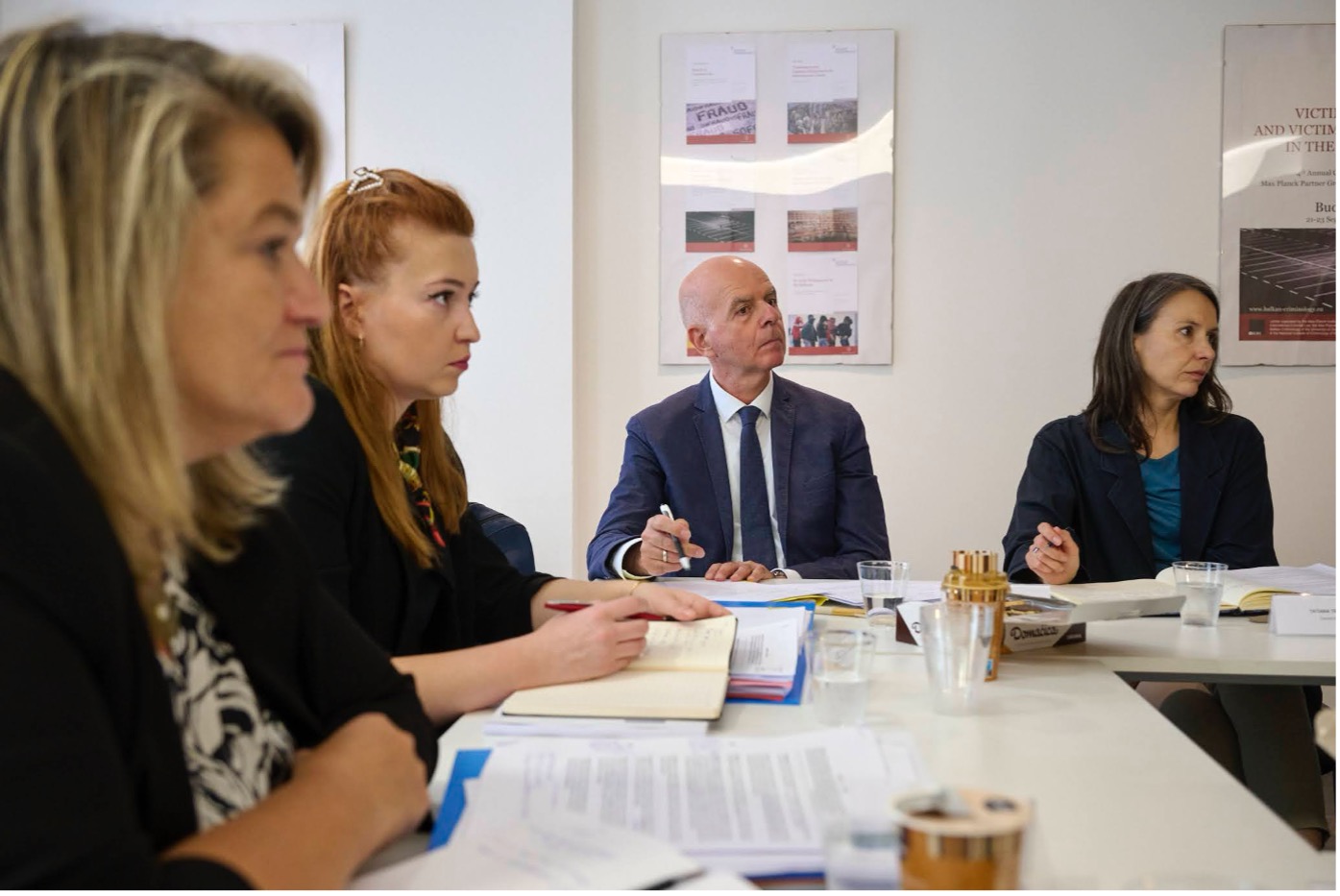
In the photo, from left to right: Ms Clare Brown, Ms Andreja Konjević,
Mr Nikolaos Sitaropoulous, Ms Tatiana Trussevits.
Photo: Sandro Weltin, Council of Europe/2025